The Dust Has Settled. What's Next?
May 20, 2026
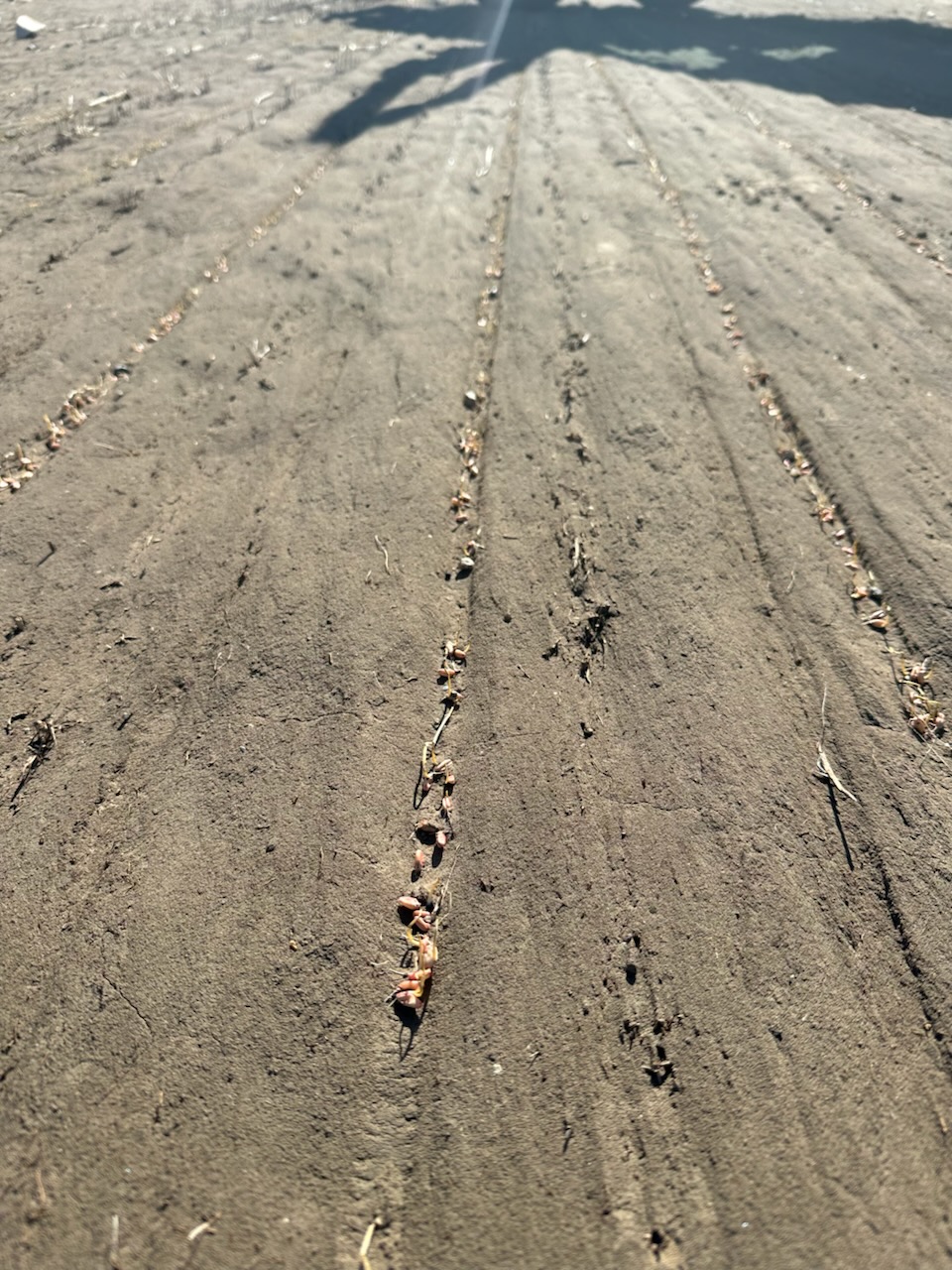
May 14 gave us a glimpse of what farming during the Dust Bowl era could have looked like. Setting a new May record for Glasgow of 82 mph top wind gust (second all-time record for any month), these historic conditions shattered both weather records and plans for farming in 2026.
We have been visiting many fields that have varying degrees of blowing, some just losing soil from the headlands and others blown into the seed bed completely. Moving forward, we believe these situations can be broken down into these two categories:
1 - Just needs patience (and rain). These fields have crop that had probably emerged, is wind-blown and maybe sand blasted, but has a viable seed and root system and will regrow. Peas, lentils, cereals, and flax have this ability. The challenging part of this is the unevenness of the conditions. Areas where soil piled up may suffocate the crop, and we aren’t sure what the concentration of herbicides in these drifts might be. This is also the best path forward for fields where the crop hadn’t emerged but is coming now with the rain.
2 - Replant considerations. Even with insurance approval (or requirement, depending on the rules) replanting won’t make sense in every situation. Herbicide history on the field (or perhaps in the soil that moved into the field) needs researched to determine what crop can safely be replanted. Replanting the initial crop may be the best management choice, but seed availability and dry conditions can cause us to consider other options.
1 - Weed control on some fields will be business as usual, but the budget per acre is perhaps more critical than ever before. We have a very wide portfolio of weed control options and can do as little or as much weed control as you need. A dry year (and a dry year with very challenging economics) is a year where the time you spend scouting your fields will be well worth it. If the best herbicide is outside of your budget, we can work with you to control the key weeds for a lower cost.
2 - Plant Health on the crops worth protecting. You may have some early seeded crops that are rooted into moisture and didn't blow out but are possibly under-fertilized or experiencing lots of abiotic stresses (dry, wind, etc.). Or you may have some crops going in the ground now that could catch rain and be well established. We are by no means blindly asking you to spend your way into "fixing the problem." But each nutrient performs a different physiological function in the plant, and certain hormones or enzymes can trigger specific recovery mechanisms or regulate genetic expression when a plant tries to adjust to adverse conditions.
It's worth exploring certain biostimulants and foliar plant nutrition options ON THE CROP THAT'S HANGING IN THERE should moisture return. There's a lot of marketing out there, but we have a short list of carbon sources, seaweed extracts, plant growth regulators, and foliar nutrition that we feel confident in through local experience and the type of research performed on our crops in similar environments.
"After all, tomorrow is another day!"
Scarlett O'Hara, Gone with the Wind
We have been visiting many fields that have varying degrees of blowing, some just losing soil from the headlands and others blown into the seed bed completely. Moving forward, we believe these situations can be broken down into these two categories:
1 - Just needs patience (and rain). These fields have crop that had probably emerged, is wind-blown and maybe sand blasted, but has a viable seed and root system and will regrow. Peas, lentils, cereals, and flax have this ability. The challenging part of this is the unevenness of the conditions. Areas where soil piled up may suffocate the crop, and we aren’t sure what the concentration of herbicides in these drifts might be. This is also the best path forward for fields where the crop hadn’t emerged but is coming now with the rain.
2 - Replant considerations. Even with insurance approval (or requirement, depending on the rules) replanting won’t make sense in every situation. Herbicide history on the field (or perhaps in the soil that moved into the field) needs researched to determine what crop can safely be replanted. Replanting the initial crop may be the best management choice, but seed availability and dry conditions can cause us to consider other options.
- Obviously, the dry conditions are impacting hay production. Replanting to a warm-season hay crop like millet or sorghum x sudan hybrids are relatively low-cost options that don’t require much fertilizer. Cool-season forages may also be good replant choices on some fields where herbicide history is more complicated. We often recommend a balance of warm- and cool-season annual hay sources if you are relying on these for your hay needs. A mixed forage base will better manage the weather risk going forward.
- Talk to us for fertility recommendations and management suggestions for nitrates, prussic acid, and herbicide tolerance.
1 - Weed control on some fields will be business as usual, but the budget per acre is perhaps more critical than ever before. We have a very wide portfolio of weed control options and can do as little or as much weed control as you need. A dry year (and a dry year with very challenging economics) is a year where the time you spend scouting your fields will be well worth it. If the best herbicide is outside of your budget, we can work with you to control the key weeds for a lower cost.
- Where the residual herbicide blew away, we do have over-the-top options to manage kochia and mustards in peas and lentils. If you have a crop that is worth the investment and contains weeds you can’t tolerate, give us a call.
- Early seeded crop is growing quickly now that we have some warmer weather and a little moisture. If you planted without spraying ahead of your drill, it’s time to get a plan together! That early wheat, durum, or barley can easily have three leaves on it already, and the hawksbeard is starting to bolt!
- There is a significant increase in flax acreage this year. Now that most kochia is resistant to glyphosate, harvest management of weedy flax has become considerably more difficult. There are broadleaf herbicides for use in flax, but timing will be critical for both crop safety of the flax and control of kochia or Russian thistle.
2 - Plant Health on the crops worth protecting. You may have some early seeded crops that are rooted into moisture and didn't blow out but are possibly under-fertilized or experiencing lots of abiotic stresses (dry, wind, etc.). Or you may have some crops going in the ground now that could catch rain and be well established. We are by no means blindly asking you to spend your way into "fixing the problem." But each nutrient performs a different physiological function in the plant, and certain hormones or enzymes can trigger specific recovery mechanisms or regulate genetic expression when a plant tries to adjust to adverse conditions.
It's worth exploring certain biostimulants and foliar plant nutrition options ON THE CROP THAT'S HANGING IN THERE should moisture return. There's a lot of marketing out there, but we have a short list of carbon sources, seaweed extracts, plant growth regulators, and foliar nutrition that we feel confident in through local experience and the type of research performed on our crops in similar environments.
"After all, tomorrow is another day!"
Scarlett O'Hara, Gone with the Wind